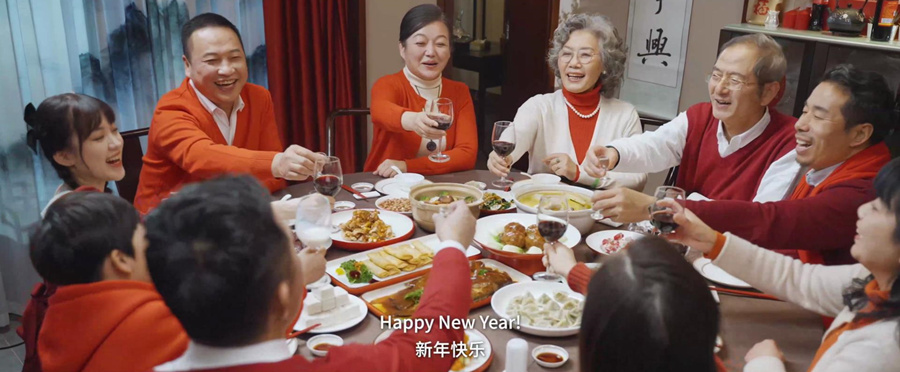
Chinese New Year's Eve
Introduction
Chinese New Year's Eve, also known as "Chuxi," is the most significant occasion in the Chinese calendar, marking the transition from the old year to the new one. It is the day preceding the Chinese New Year, which is celebrated on the first day of the first month of the traditional Chinese calendar. This evening is a time when family members gather from all corners of the world to reunite with their loved ones, making it one of the most important family events of the year. The celebration is not confined to just the eve itself but is part of a larger festival known as the Spring Festival, which is the grandest and most important festival in China. The New Year's Eve is characterized by a host of traditions and customs that have been passed down through generations, each imbued with deep cultural significance. From elaborate family dinners to vibrant fireworks displays, the customs observed during Chinese New Year's Eve reflect the rich tapestry of Chinese culture and heritage.
Historical Background
The historical roots of Chinese New Year's Eve can be traced back over 3,000 years before the Shang Dynasty (c.16th century-11th century BC) when people would offer sacrifices to gods and ancestors at the year's end. Over time, the celebration evolved, incorporating various religious and cultural elements that reflected the beliefs and practices of different dynasties. During the Han Dynasty (206 BC–220 AD), the festival took on greater significance with rituals to worship ancestors and gods, and the use of firecrackers to ward off evil spirits became popular.
The event was further enriched during the Tang (618–907 AD) and Song (960–1279 AD) dynasties, when customs such as hanging Spring Festival couplets and giving red envelopes originated. These traditions were strongly tied to superstitions and the agrarian lifestyle of ancient China, aiming to ensure a bountiful harvest and good fortune in the coming year. By the time of the Ming (1368–1644 AD) and Qing (1644–1912 AD) dynasties, New Year's Eve had become a time for family reunions, reflected in the practice of having a large family meal. The historical evolution of New Year's Eve highlights its significance as a blend of cultural, historical, and familial elements that have shaped its celebration into what it is today.
Cultural Significance
Chinese New Year's Eve holds profound cultural significance as it symbolizes the renewal of life and the beginning of a new cycle. It is a time for family, marking both an end and a fresh start. The reunion dinner on New Year's Eve is crucial as it epitomizes unity and togetherness, essential values in Chinese culture. This dinner is not merely a feast but a cherished moment that brings family members together to express gratitude, share blessings, and wish for happiness and prosperity in the coming year.
The evening is also steeped in symbolism, with various customs holding deep cultural meanings. For instance, the tradition of staying up late, known as "Shou Sui," is believed to bring longevity to parents. Additionally, sending off the old year and welcoming the new is often accompanied by rituals to ward off evil spirits, where firecrackers play a significant role. The cultural significance of Chinese New Year's Eve extends beyond individual families, as it reinforces community bonds and national identity by encouraging the preservation and practice of age-old traditions that have been passed down through generations.
Celebrations and Traditions
Chinese New Year's Eve is rich in traditions and customs, each with its own unique significance. The celebrations typically begin with thorough cleaning of the house to sweep away bad luck and make way for incoming good fortune. This is followed by the decoration of homes with red lanterns and couplets featuring auspicious phrases. The centerpiece of the celebration, however, is the family reunion dinner.
Family Reunion Dinner
The family reunion dinner is the most anticipated part of Chinese New Year's Eve, bringing together family members to share a meal laden with symbolic dishes. In northern China, dumplings are a staple, representing fortune and wealth due to their resemblance to ancient gold ingots. In southern China, fish is an essential dish because the word for fish in Chinese sounds like "surplus" or "prosperity," symbolizing abundance. Other popular dishes include sweet rice balls for unity, braised pork for wealth, and hot pot for reunion.
Fireworks and Firecrackers
Fireworks and firecrackers are integral to New Year's Eve celebrations, serving both a cultural and practical purpose. Traditionally, they are believed to scare away evil spirits and bring good luck. The loud noise is thought to ward off the mythical beast "Nian," which, according to legend, would attack villagers during the New Year. Today, firework displays are a colorful and lively way to mark the arrival of the New Year, creating a festive atmosphere.
Red Envelopes
Another cherished tradition is the giving of red envelopes, or "hongbao," which contain money and are given to children and unmarried adults. This practice symbolizes the transfer of good fortune from the elder generation to the younger one. The red color of the envelopes is considered auspicious, representing good luck and prosperity. The act of giving red envelopes strengthens family bonds and conveys blessings for the recipient's happiness and success in the New Year.
Modern Observations
In contemporary times, the celebration of Chinese New Year's Eve has adapted to modern lifestyles while retaining its core traditions. With the advent of technology, many families now incorporate virtual gatherings into their celebrations, allowing family members who cannot travel home to participate in the festivities via video calls. The widespread broadcast of the Spring Festival Gala on television has also become a popular tradition, with families watching the program together as part of their New Year's Eve activities.
Urbanization and globalization have introduced new elements to the celebration, with more elaborate fireworks displays and themed events in major cities. Additionally, while the traditional reunion dinner remains central, some families opt for dining out in restaurants to accommodate larger gatherings or to ease the burden of cooking. Despite these changes, the essence of Chinese New Year's Eve as a time for family, renewal, and the observance of cultural traditions continues to be cherished by Chinese communities around the world.
Regional Variations
The celebration of Chinese New Year's Eve varies across different regions of China, each with its own customs and traditions. In northern China, the focus is often on hearty, warming dishes like dumplings and hot pots, reflecting the colder climate. Meanwhile, in southern China, the emphasis is on lighter dishes featuring seafood and fresh vegetables, symbolizing prosperity and growth.
The types of food served during the reunion dinner can also differ significantly, with southern regions favoring dishes like Buddha Jumps Over the Wall, a luxurious soup made with premium ingredients. In contrast, the north might offer more wheat-based dishes such as noodles, which symbolize longevity. Regional dialects and local customs further influence the celebration, with variations in the way red envelopes are given or how blessings are exchanged. These regional differences enrich the tapestry of Chinese New Year's Eve traditions, showcasing the diverse cultural heritage of China.
Global Influence
The influence of Chinese New Year's Eve extends far beyond China's borders, as Chinese communities around the world celebrate the occasion with their own unique adaptations. In countries with significant Chinese populations, such as Malaysia, Singapore, and the United States, the celebrations include parades, lion dances, and cultural performances that introduce local populations to Chinese traditions.
Global cities such as London, Sydney, and San Francisco host public events and festivals to mark Chinese New Year, attracting both Chinese and non-Chinese attendees eager to experience the vibrant culture and festivities. Moreover, the commercialization of Chinese New Year has led to its recognition in the global retail industry, with stores offering special promotions and decorations to celebrate the occasion. Through these global celebrations, Chinese New Year's Eve not only preserves Chinese cultural heritage but also fosters cross-cultural understanding and appreciation.








